Real-time AI coaching that measures your eye crinkle, mouth lift, and symmetry to help you master the Duchenne Smile — the only smile that reaches your eyes.
/d(j)uːˈʃɛn/ — noun
A genuine smile that engages the muscles around the eyes — the only smile that truly reaches your eyes. Named after Guillaume Duchenne, a 19th-century French neurologist who discovered the difference.
Most people can't produce one on command. The orbicularis oculi — the eye-crinkle muscle — is nearly impossible to control voluntarily. That's why fake smiles look fake.
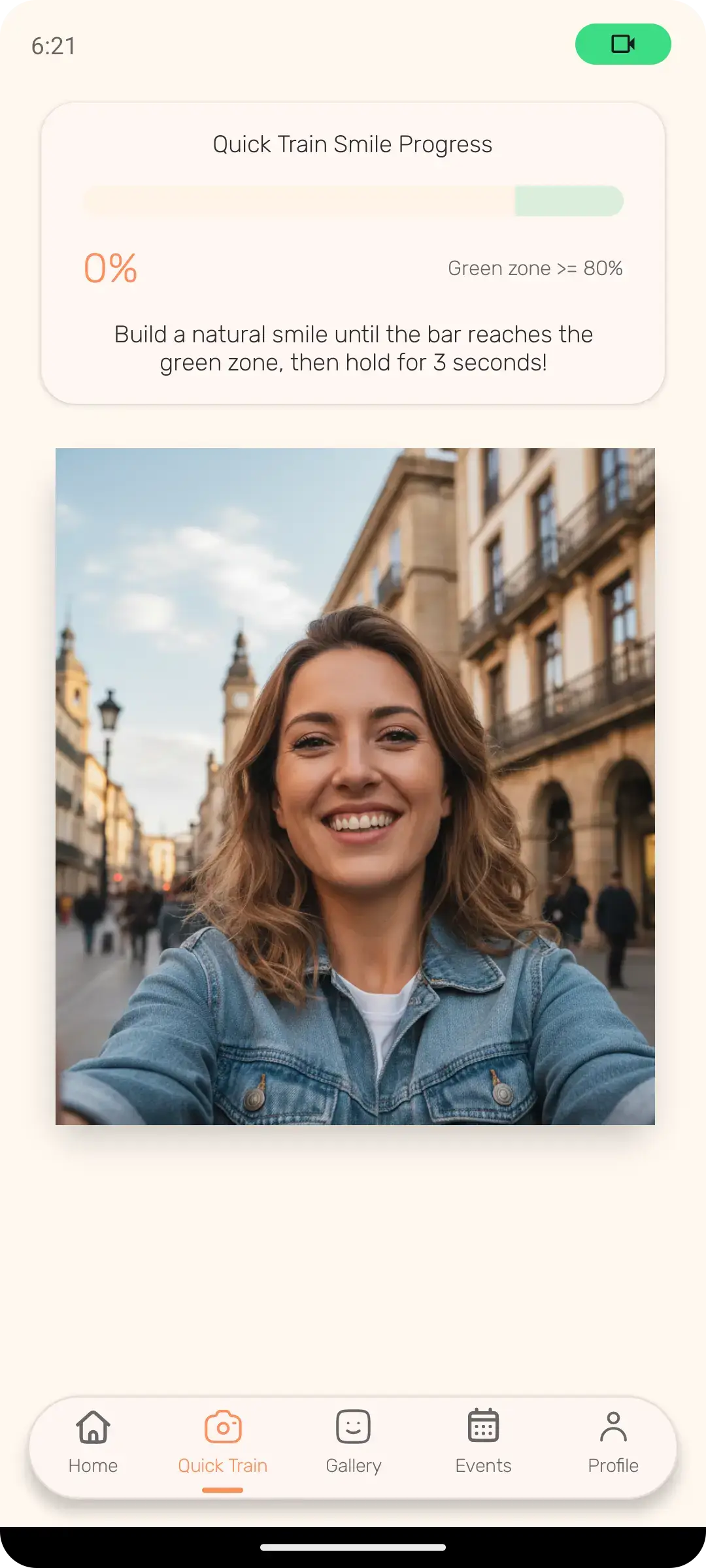
Real-time AI analysis measures three components of your smile, coaching you to improve each one.
The Duchenne marker. Genuine eye crinkle from the orbicularis oculi muscle — the one thing you can't fake.
Natural mouth lift and openness. The app tracks how your smile shapes your whole expression.
Left/right balance for an authentic, even smile. Small asymmetries can signal a forced expression.
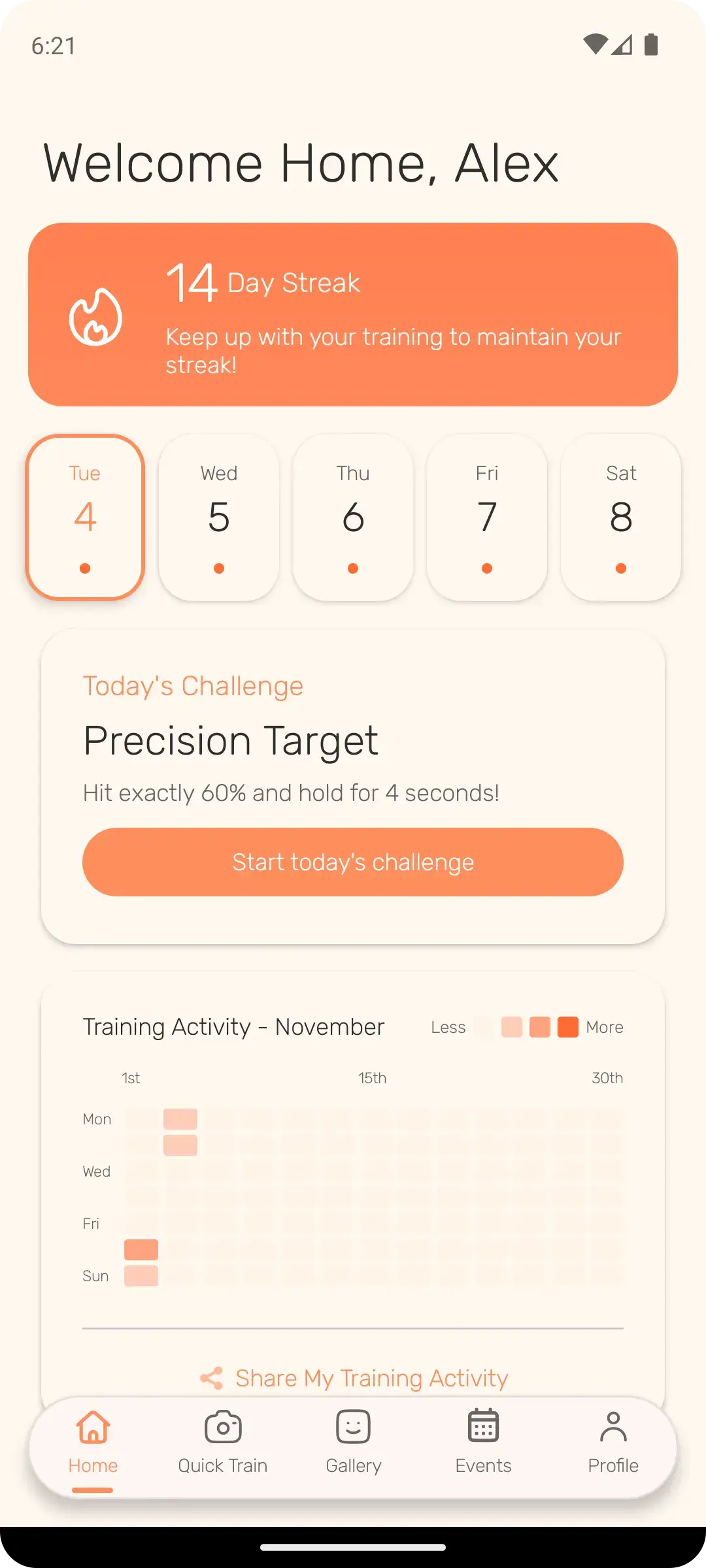
From daily training to event prep, Duchenne has you covered.
A new challenge every day with different mechanics to keep training fresh. Hold your smile, nail a snapshot on a countdown, or prove consistency in rapid-fire bursts.
5-second smile sessions for daily practice. Hold a genuine Duchenne Smile to build muscle memory so your natural smile becomes more authentic over time. Perfect for a quick daily check-in.
Training for life's big moments — weddings, interviews, graduations, photos. Create an event, set the date, and get a 7-day challenge window of escalating training leading up to your day.
Detailed analytics, achievement milestones, and progress tracking. See your improvement over time with graphs, streaks, and celebrate every personal best along the way.
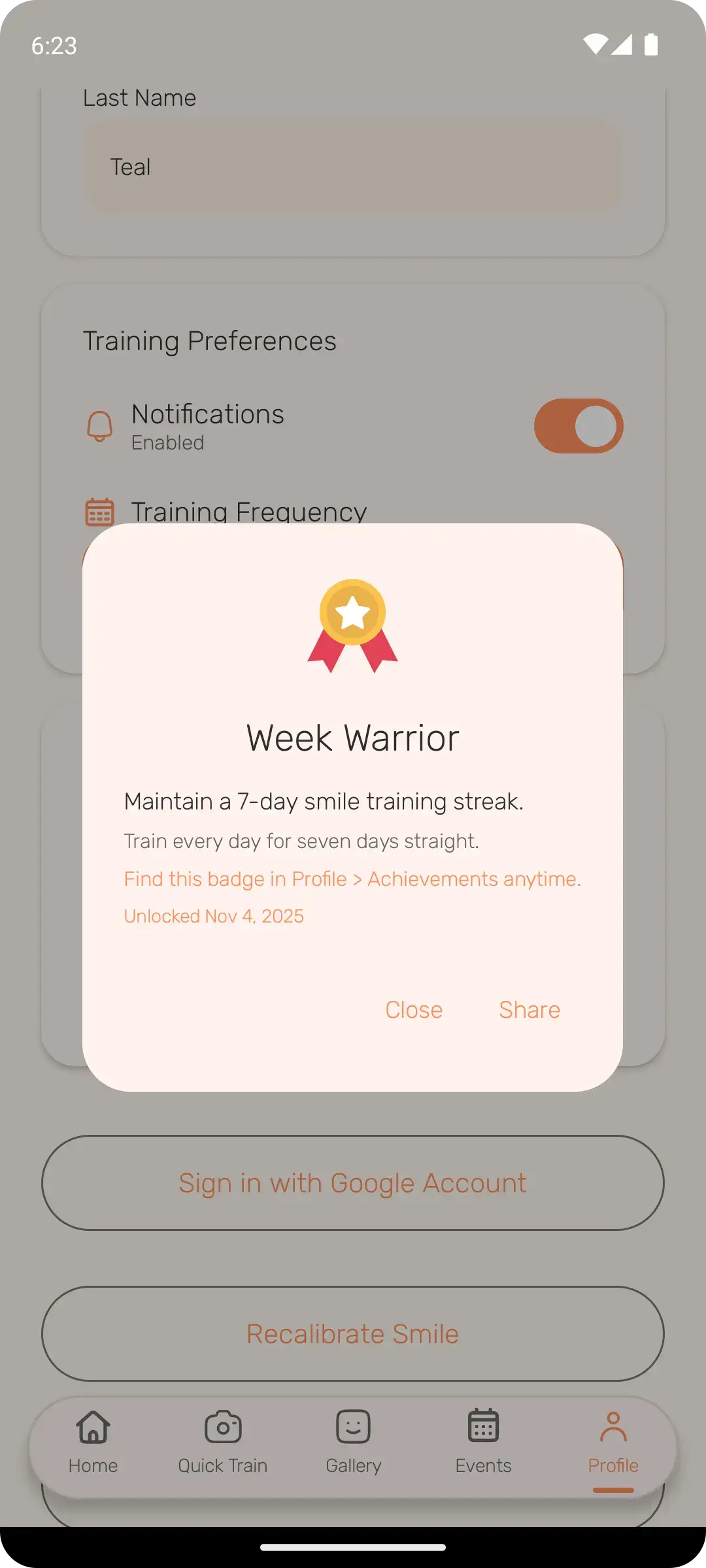
Fun, playful milestones that celebrate your smile journey.
Start free. Upgrade when you're ready to unlock everything.
Fun facts about the world's most powerful facial expression.
A Duchenne Smile uses 12 muscles, while a polite smile only uses 4.
Humans can spot a fake smile in as little as 50 milliseconds — faster than a blink.
People who smile more tend to live an average of 7 years longer.
Smiling releases endorphins, serotonin, and dopamine — your brain's natural feel-good chemicals.
Babies start smiling genuinely at around 6-8 weeks old — it's one of the first social signals.
A smile is the most universally recognised facial expression across all cultures.
Smiling can lower your heart rate during stressful situations.
Research shows people trust others with genuine smiles 50% more than those with polite smiles.
Everything happens on your device. Nothing leaves your phone.
All smile analysis runs locally with on-device machine learning. Nothing leaves your phone.
Photos and camera data never leave your phone. Period.
Optional Google backup is user-controlled. Turn it off any time.
Zero third-party analytics, trackers, or data collection.
Live on Google Play
Install Duchenne free from Google Play, point the camera at yourself, and start training your genuine smile today.
Get it on Google Play →Free on Android 8.0+.